
Nicholas G. Callas / Car accident resources
What Happens If the Driver Who Hit You Has No Insurance in South Carolina?
Understanding uninsured motorist coverage and your options after a South Carolina collision.
The short answer
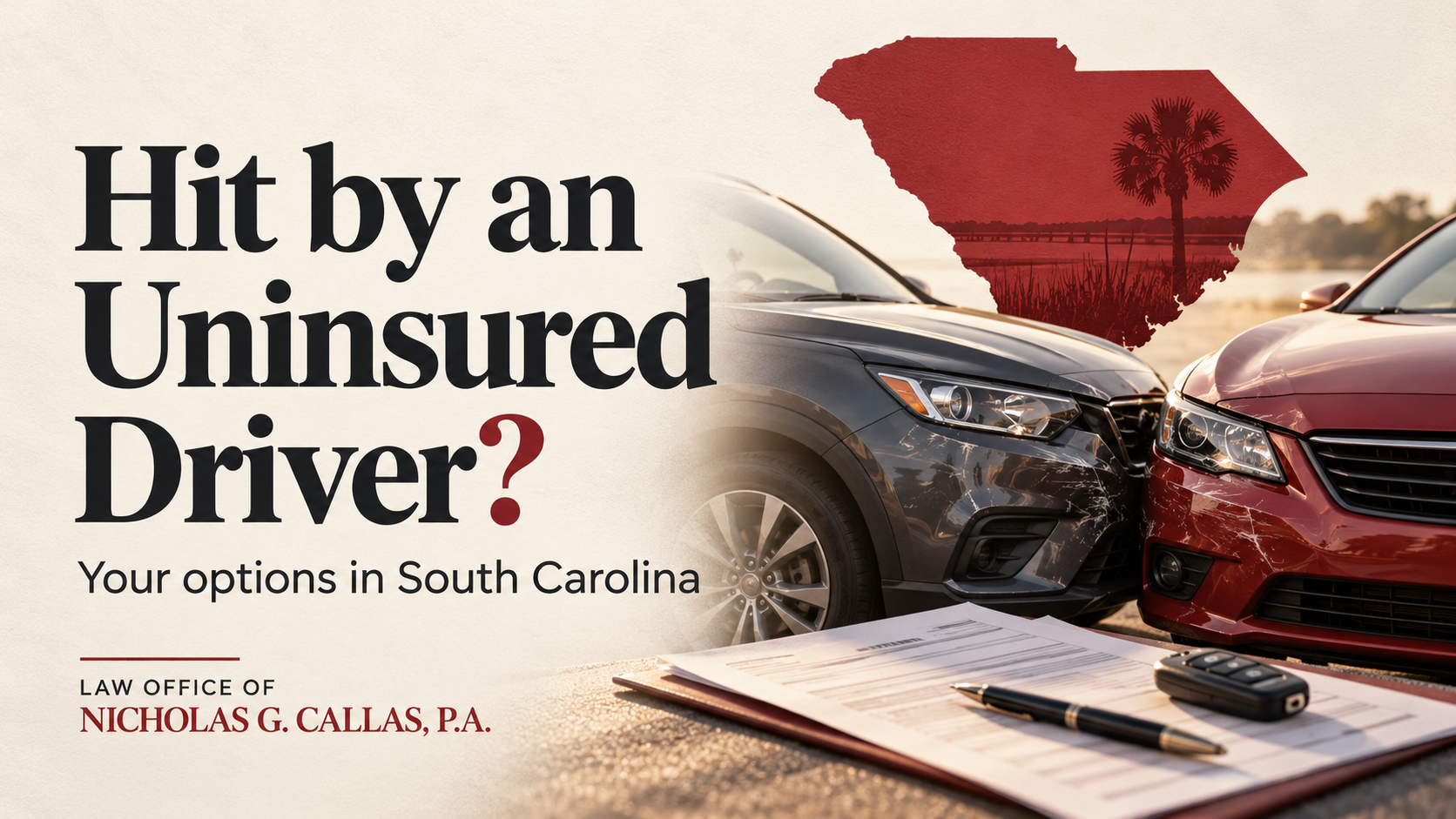
An uninsured driver does not necessarily leave you without options. Depending on the circumstances, uninsured motorist (UM) coverage may provide compensation when the at-fault driver has no insurance.
Key takeaways
- UM and underinsured motorist (UIM) coverage address different situations.
- Hit-and-run claims involve specific reporting and evidence requirements.
- Preserve evidence, seek medical attention, and notify your insurer after a collision.
- Coverage, fault, and damages may still be disputed in a UM claim.
Getting hit by another driver is stressful enough. Finding out afterward that the driver has no auto insurance can make the situation even more frustrating.
You may be dealing with medical bills, time away from work, vehicle repairs, and other expenses while wondering who will pay for them.
An uninsured driver does not necessarily leave you without options. South Carolina auto policies generally include uninsured motorist, or UM, coverage.
Depending on the circumstances, UM coverage may provide compensation when the at-fault driver has no insurance.
Here is what South Carolina drivers should know.
What Is Uninsured Motorist Coverage in South Carolina?
South Carolina law requires automobile insurance policies to contain uninsured motorist coverage in at least the amounts required by the state's financial responsibility laws.
South Carolina Code Section 38-77-150 requires UM coverage in automobile policies issued or delivered in the state. Drivers may also purchase additional UM coverage, subject to statutory limits.
The current minimum liability limits referenced by South Carolina law are:
- $25,000 for bodily injury to one person in one accident
- $50,000 for bodily injury to two or more people in one accident
- $25,000 for property damage in one accident
UM property damage coverage is also addressed by South Carolina law, including a potential deductible for property damage claims.
Uninsured vs. Underinsured Motorist Coverage
Uninsured motorist coverage and underinsured motorist coverage are related, but they are not the same thing.
UM coverage generally applies when the at-fault driver has no applicable insurance.
Underinsured motorist, or UIM, coverage may apply when the driver has insurance but not enough to cover the injured person’s damages.
South Carolina insurers must offer UIM coverage, but consumers are not required to purchase it.
What Happens After an Uninsured Driver Accident in South Carolina?
If an uninsured driver causes your accident, you may be able to pursue an uninsured motorist claim through an applicable policy.
The insurer does not automatically pay every amount requested. Disputes can still arise over fault, whether the injuries were caused by the crash, and the amount of damages.
For a broader look at how liability, damages, insurance negotiations, and lawsuits may fit together, see the Law Office of Nicholas G. Callas's guide to how car accident claims work in South Carolina.
What Can an Uninsured Motorist Claim Cover?
Depending on the circumstances and available coverage, an uninsured motorist claim in South Carolina may involve losses such as:
- Medical expenses
- Future medical expenses when supported by the evidence
- Lost wages or loss of earning capacity
- Pain and suffering
- Property damage
- Other damages allowed under South Carolina law
For more information about potential compensation after a serious collision, read the firm's discussion of damages that may be recoverable after a serious car accident.
The amount recoverable in any case depends on the facts, the injuries involved, available insurance coverage, applicable law, and other factors.
What If the Uninsured Driver Leaves the Scene?
A hit-and-run can present additional challenges because you may not know who caused the accident or whether that person had insurance.
South Carolina law allows certain UM claims involving an unknown driver, but specific requirements apply. Section 38-77-170 addresses notice to law enforcement and evidence of the unknown driver’s involvement.
Evidence is especially important after a hit-and-run. Helpful evidence may include:
- Photographs or video from the accident scene
- Dashcam recordings
- Surveillance footage
- Witness names and contact information
- Police reports
- Photographs showing vehicle damage
If the other vehicle leaves the scene, report the crash promptly and preserve as much information as possible.
What Should You Do After Being Hit by an Uninsured Driver in SC?
Your first priority should be getting appropriate medical attention for any injuries.
Report the collision, gather evidence, collect witness information, and notify your insurer. Keep copies of medical records, bills, repair estimates, wage records, and insurance correspondence.
Do not assume there is no coverage simply because the other driver says they are uninsured. Determining what insurance applies may require a closer review of the available policies.
The firm's South Carolina car accident lawyer page provides additional information about personal injury claims arising from serious motor vehicle collisions.
Can a Passenger File an Uninsured Motorist Claim?
Potentially. Whether uninsured motorist coverage applies to an injured passenger depends on the policies and circumstances involved.
South Carolina's statutory definition of an "insured" for automobile insurance purposes can include certain passengers or guests in an insured vehicle.
A passenger should not assume that coverage is unavailable simply because they were not the vehicle owner or driver.
The Law Office of Nicholas G. Callas has a separate article explaining when a passenger may recover damages after an auto accident. That resource focuses specifically on passenger claims, while this article focuses on what happens when an at-fault motorist is uninsured.
FAQ About Uninsured Driver Accidents in South Carolina
Does South Carolina require uninsured motorist coverage?
Yes. South Carolina law requires automobile insurance policies issued or delivered in the state to include uninsured motorist coverage that meets statutory requirements.
Is UM coverage the same as UIM coverage?
No. UM coverage generally applies when the at-fault driver has no applicable insurance. UIM coverage may apply when the responsible driver has insurance but the available liability coverage is insufficient. South Carolina insurers must offer UIM coverage, but purchasing it is optional.
Can I make a UM claim after a hit-and-run accident?
Possibly. South Carolina law allows certain claims involving unknown drivers, but statutory reporting and evidentiary requirements apply.
Will my own insurance company automatically pay my UM claim?
Not necessarily. Questions involving liability, damages, policy coverage, and compliance with claim requirements may still need to be resolved.
Should I speak with a lawyer after an accident involving an uninsured driver?
If you suffered significant injuries or there is a dispute involving liability, damages, or insurance coverage, speaking with a personal injury attorney can help you understand the options available in your situation.
Talk With the Law Office of Nicholas G. Callas About an Uninsured Driver Accident
An accident involving an uninsured driver can raise complex insurance questions, but the other vehicle's lack of liability insurance does not necessarily mean compensation is unavailable.
The Law Office of Nicholas G. Callas, P.A. represents clients in South Carolina personal injury and motor vehicle accident matters.
If an uninsured driver hurt you, the firm can review the collision circumstances and any applicable insurance coverage.
Contact the Law Office of Nicholas G. Callas HERE to discuss your situation.

Law Office of Nicholas G. Callas
Understand your options.
Take your next step.
Speak with our office about your uninsured driver accident and applicable insurance coverage.
Contact Nicholas G. Callas803-369-3968
This article provides general information and is not legal advice. Reading it does not create an attorney-client relationship. For this article’s review information, see the notice above.